Online Casino $1 Minimum Deposit: What Holds Up in an Australian Cashier
 Best casinos available in AustraliaUpdated 7 November 2026

WinCrown · Welcome bonus200 free spins on selected slots
Reviews (9,827)
4.9Rating

An online casino $1 minimum deposit does exist, but rarely as the standard cashier minimum: Australians mostly meet it as a one-off sign-up promotion or on a single payment route, while the everyday minimum on the same site sits higher. We have not confirmed a A$1 minimum at any named operator for this page, so treat every such claim as unverified until the cashier itself accepts the amount from an Australian account.
Whether a dollar goes through depends on the method, the account currency and your bank. Low minimums show up most often on crypto and occasionally on vouchers or bank transfer, far less on cards; an account held in a foreign currency turns “$1” into something other than A$1; and some Australian banks decline gambling payments outright. Depositing and withdrawing are separate questions. The minimum withdrawal is almost always many times the minimum deposit, so check both before you send anything.

Three things a “$1 deposit” can mean
The phrase covers three different arrangements, and most confusion comes from mixing them up.
A promotional first deposit
The most common version. A new account can make one deposit of a dollar to unlock a set of spins or a small bonus. The low figure applies to that first payment only. From the second deposit on, the regular minimum returns. The promotion's terms decide which game the spins land on, what each spin is worth and what has to happen before any winnings become cash.
A method-specific minimum
Some cashiers set a different floor for each payment method. One route might accept a very small amount while cards start much higher. A site can truthfully advertise “deposits from $1” on the strength of one method that few of its Australian customers actually use.
A true site-wide minimum
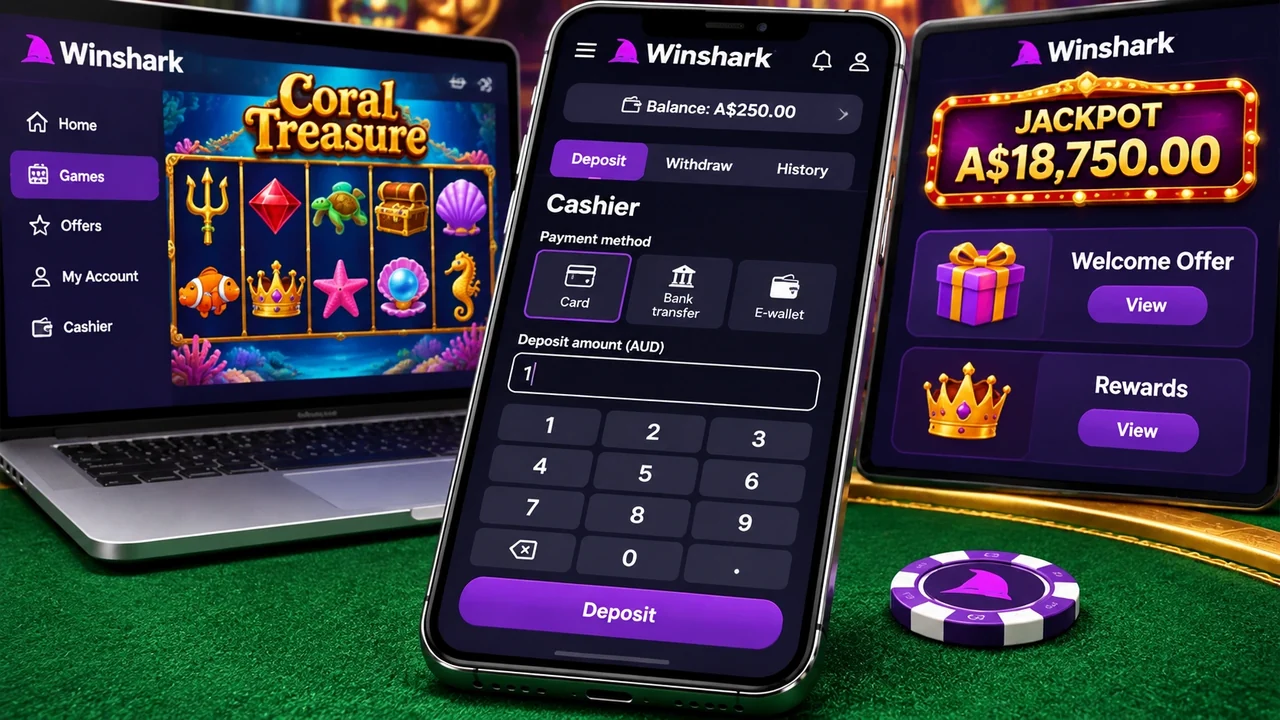
The rarest version: every deposit, on every main method, can be a dollar. It is uncommon because each transaction costs the casino money to process, as the next section explains. If a site claims this, it is easy to test. Open the cashier, pick the method you would really use and type 1 in the amount field. The form either accepts it or shows the real minimum.
A banner alone settles nothing. Review pages copy each other, promotions end and cashier settings differ by country. The only evidence that counts is the deposit form in front of you, on your account, on the day.
Why most cashiers won't take a single dollar
Casinos don't set minimums to keep small players out. They set them because moving money costs money. Card processors and payment gateways generally charge the merchant a percentage plus a fixed amount per transaction, and gambling merchants sit in a high-risk category that tends to pay more. On a tiny deposit the fixed part of that fee can swallow most of the payment.
There are other costs behind the scenes: fraud screening on each payment, customer support time, and the identity checks that follow when the account later asks for a withdrawal. A customer who deposits a dollar, uses a welcome offer and never returns is a loss on the books. That is why the common standard minimums across the market are set at round figures above a dollar, and why a one-dollar floor, where it exists, is normally a marketing decision: the casino accepts a loss on the first payment in exchange for a registered, contactable customer.
Understanding that trade explains the fine print. The spins are locked to one game, the win is capped, the withdrawal floor is high. Each rule is there to limit what the dollar can cost the operator.
Which payment routes can carry a dollar in Australia
Not every method is built for small amounts. The table sets out how the main routes behave for an Australian depositing a very small sum. It describes general behaviour; the actual minimums are whatever a given cashier shows.
| Route | How likely to accept a very small deposit | The catch |
|---|---|---|
| Debit or credit card | Unlikely. Card minimums are usually among the highest in a cashier | Your bank may decline gambling payments, and an overseas charge can attract a foreign transaction fee larger than the deposit |
| PayID / bank transfer | Sometimes. Depends on the intermediary the casino uses | The recipient is often a third-party payment company; transfers you approve yourself are hard to reverse |
| Prepaid vouchers | Sometimes, but vouchers are sold in fixed values above a dollar | Usually deposit-only, so withdrawals need a second verified method |
| E-wallets | Occasionally | Loading and withdrawing from the wallet can carry its own fees and minimums |
| Crypto | Most likely. No card processor in the middle | Network fees can exceed the deposit, the price moves, and a transfer on the wrong network is lost |
Crypto deserves a second look, because it is where low minimums are most often genuine. Sending a dollar's worth of a coin is possible, but the network charges a fee to move it and that fee doesn't shrink with the amount. On a busy network the fee can be several times the deposit. A “$1 minimum” that costs A$3 to send isn't a one-dollar deposit in any useful sense. Our crypto network and custody checklist covers what to confirm before sending.
For bank-based routes, the wider picture is in our audit of casino payment methods and the AUD payments currency route.
Is your dollar an Australian dollar?
Review pages written for several countries at once use “$1” without saying whose dollar it is. An offshore site may keep accounts in US dollars, euros or another currency and simply display a dollar sign. If the account isn't held in AUD, a one-dollar minimum means one unit of that currency, converted at the processor's rate, possibly with an international fee from your bank added on top.
On a A$100 deposit a small conversion margin is easy to shrug off. On a single dollar, a flat bank fee can exceed the deposit itself. Before testing a micro-deposit, check the account currency in your profile settings and look at how your bank treats overseas card payments. If the cashier quote and the bank debit don't match, you have found the hidden cost.
What A$1 actually buys on the pokies
Assume the dollar arrives intact. What can it do? The answer depends on the smallest bet the game allows. Many online pokies have minimum spins somewhere in the range of ten to twenty cents, and some go lower. The arithmetic below is an illustration.
| Stake per spin | Spins from A$1 with no wins | Rough time at a normal pace |
|---|---|---|
| A$0.10 | 10 | Under a minute |
| A$0.20 | 5 | About half a minute |
| A$0.50 | 2 | A few seconds |
Ten spins isn't a session. It is a look. Wins along the way will stretch it, and once in a while a feature will land and turn a dollar into something more, but the typical result of ten spins on any pokie is a balance of a few cents or nothing. Table games are generally out of reach altogether, since minimum bets at live tables tend to start at or above the whole deposit.
So the honest use for a one-dollar deposit is not to play for an evening. It is to test the site: does the cashier work, does the payment show correctly on your statement, does the lobby load on your phone, does support answer. Looked at that way, a dollar is a cheap inspection fee.
The bonus attached to a one-dollar deposit
Where the dollar unlocks a promotion, the promotion is the real product, and it comes with the same structure as any other casino bonus. Four terms decide what it is worth.
- Spin value. Promotional spins are set at a fixed stake chosen by the casino, normally the game's minimum. Eighty spins at ten cents is A$8 of play, not a jackpot ticket.
- Wagering. Winnings from the spins are usually credited as bonus money and must be bet a set number of times before they convert to cash.
- Maximum cash-out. Many low-deposit offers cap what you can withdraw from them, whatever the balance reaches.
- Expiry and game list. Spins may need to be used within a short window, on one title, and the wagering may be limited to certain pokies.
A worked example, with invented numbers: the spins return A$6 in winnings and the terms require those winnings to be wagered 50 times. That is A$300 in bets from a A$6 balance, at the smallest stakes, before anything can be withdrawn. Most balances don't survive the trip. The ones that do then meet the cash-out cap. The method for pricing any offer this way is in converting the headline into turnover, and the general equation is in our page on wagering requirements.
None of this makes the offer worthless. For a dollar you get a longer look at a real-money game than the dollar alone would buy. Just value it as entertainment, not as a route to a withdrawal. The same logic applies to offers with no deposit at all, which we cover in real money free spins with no deposit.
The withdrawal floor: where a tiny deposit comes unstuck
This is the part that review tables leave out. Every cashier has a minimum withdrawal as well as a minimum deposit, and the two are rarely the same. The withdrawal floor is commonly set well above the deposit floor, and some methods add a fixed fee on top.
Picture a balance that grows from A$1 to A$14 on a lucky feature. If the minimum withdrawal is higher than A$14, that money can't leave. You have two options: keep playing in the hope of reaching the floor, or deposit more. Both suit the casino. It is the single most common way a one-dollar deposit ends.
Three more withdrawal conditions catch small depositors:
- Method mismatch. If you deposited with a voucher or another deposit-only route, the withdrawal has to go somewhere else, usually a bank account, which must be verified first.
- Identity checks. Verification is the same whether you are cashing out A$20 or A$2,000: photo ID, proof of address and proof of the payment method. See safer document handling for casino KYC.
- Deposit turnover rules. Some sites require every deposit to be wagered a set number of times before a withdrawal, bonus or no bonus.
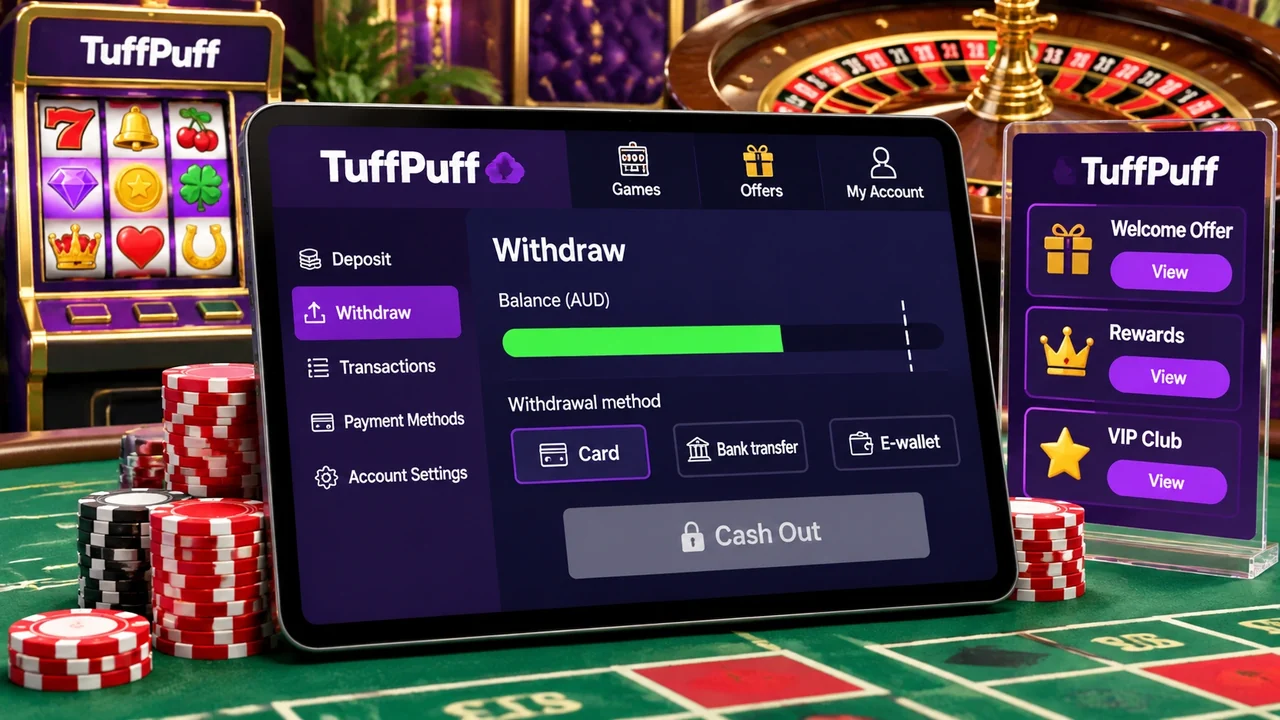
Find the minimum withdrawal for your method before you deposit. It is in the payments or cashier section of the terms. If it isn't stated, ask live chat and save the answer. Our file on verifying withdrawal caps shows what a complete answer looks like.
Where micro-deposits usually go wrong
The amounts are small, so the mistakes feel harmless. They are the same mistakes people make with bigger sums, just cheaper to learn from.
- Chaining small deposits. A dollar, then five, then ten, each one felt as loose change. Add them up at the end of the night and the total is rarely loose change. Decide the ceiling for the session before the first payment.
- Opening several accounts to repeat the offer. One account per person is a standard term everywhere. Duplicate accounts are the quickest way to have winnings voided, and the casino will find them at verification.
- Raising the stake once the spins are done. Bonus terms normally carry a maximum bet. Going over it while wagering is a common reason for a confiscated balance.
- Ignoring the fee on your side. A flat bank or network charge on every tiny payment can cost more than the play it buys.
- Treating the test as passed too early. A deposit that works proves the easy half. The site is only tested once a withdrawal has come back.
If the plan is simply to inspect a site, decline the bonus where you can, play the dollar, and judge the cashier, the lobby and the support desk on what you saw.
How to verify an online casino $1 minimum deposit claim
A claim can be checked in about ten minutes without risking more than the dollar. Work through it in this order and stop at the first failure.
- Find the claim on the casino's own site, not a review page: the promotions page or the payments table. Note the date and take a screenshot.
- Read whether the dollar applies to the first deposit only, to one method only, or to all deposits.
- Register and check the account currency. If it isn't AUD, work out what one unit costs you.
- Open the cashier, choose the method you would really use and enter 1. See whether the form accepts it for an Australian account.
- Before confirming, look up the minimum withdrawal for the same method and any fee.
- If a bonus is attached, read the wagering, the cash-out cap and the expiry. Decline it if the cashier lets you and you only want to test the site.
- After depositing, check your bank or wallet statement for the exact amount debited and the name of the recipient.
Keep the screenshots. If the promotion later behaves differently from what was advertised, you have a dated record to put in front of support.
One dollar or a little more: picking a sensible first deposit
A minimum is a floor, not a recommendation. The right first deposit depends on what you want from it.
| Your aim | What suits it | Why |
|---|---|---|
| Test that the cashier and site work | The lowest amount the cashier accepts on your method | You are buying information, not playtime |
| Try a specific low-deposit promotion | Exactly the qualifying amount | Anything extra is tied to the same bonus rules |
| Play a short pokies session | Enough for at least a hundred minimum-stake spins | Fewer spins than that and variance decides everything in the first minute |
| Have a realistic chance of reaching the withdrawal floor | At least the minimum withdrawal itself | Starting far below the floor means you need a large multiple just to cash out |
Seen this way, a one-dollar deposit is a tool with one good use: finding out, cheaply, whether a site's payments behave as advertised. For actual play, a slightly larger amount that you have budgeted for and are content to lose does a better job, because it gives the session room and brings the withdrawal floor within reach.
One legal note to close. Online casino services aren't licensed in Australia; the Interactive Gambling Act 2001 prohibits operators from offering them here, and ACMA can have such sites blocked. That means a small deposit carries the same counterparty risk as a large one, which is another reason to keep first payments modest. More on that in Australian online casino law: the ACMA route. Gambling is for adults: 18+, and only with money you can afford to lose.
One-dollar deposits: quick answers
Can I really deposit just A$1 at an online casino from Australia?
Sometimes, most often as a first-deposit promotion or through one particular payment method. A standard A$1 minimum across all methods is unusual. The only reliable test is entering the amount in the cashier of your own account.
Which payment method is most likely to accept a $1 deposit?
Crypto, because there is no card processor charging the casino a fixed fee. The trade-off is that the network fee you pay to send it can be larger than the deposit. Cards are the least likely to accept such a small amount.
Can I withdraw winnings from a $1 deposit?
Only if the balance reaches the site's minimum withdrawal, any wagering is complete and your account is verified. The minimum withdrawal is typically far higher than a dollar, and promotional winnings are often capped.
Does a $1 deposit qualify for the welcome bonus?
It qualifies only for promotions that name a one-dollar deposit. Regular welcome packages state their own minimum qualifying deposit in the terms, and it is usually higher than the cashier minimum.
Will my bank charge a fee on a $1 casino deposit?
It can. If the payment is processed overseas or in another currency, your bank may add an international transaction fee, and some Australian banks block gambling payments on cards altogether. Check your statement after the first deposit.
Is a $1 minimum deposit casino safer than one with a higher minimum?
No. The size of the minimum says nothing about the operator. It limits how much you put at risk on the first payment, which is useful, but the checks on the company, the terms and the withdrawal rules are the same at any amount.